
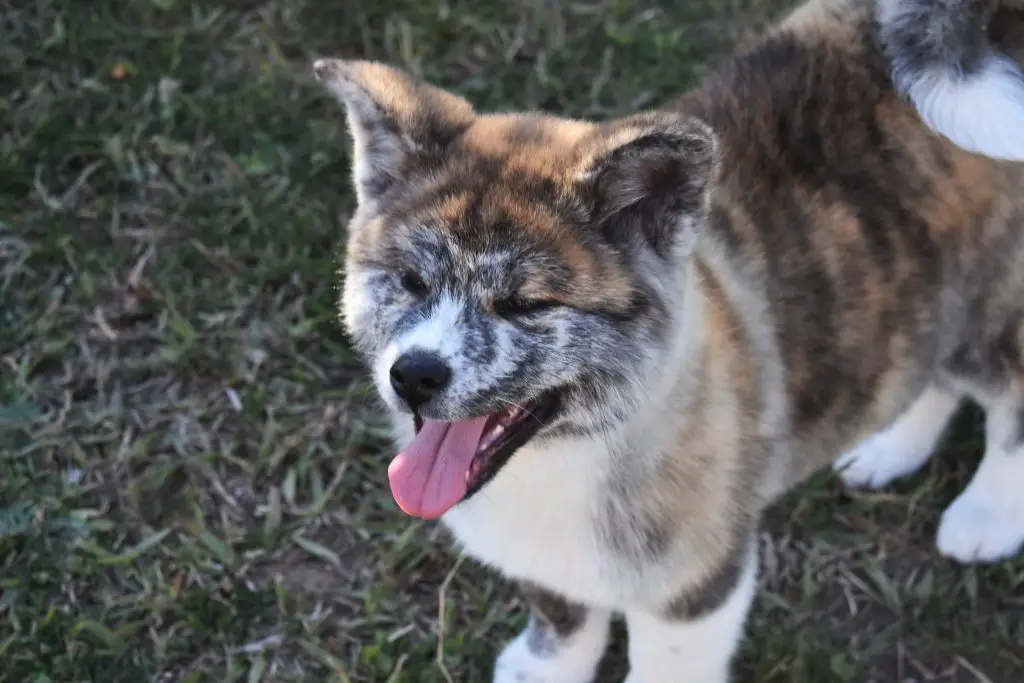
The Akita is a large, powerful, deeply loyal dog that is not for everyone, and the breed does itself no favours by being widely misunderstood. A great deal of what circulates online about Akitas — blue eyes, hypoallergenic coats, easy first dogs — is simply wrong.
Here are straight answers to the questions people actually ask, starting with the one that generates the most confusion.
Do Akitas have blue eyes?
No. Purebred Akitas do not have blue eyes. The official AKC breed standard specifies eyes that are “dark brown, small, deep-set and triangular in shape.” There is no blue-eyed variant, and no reputable breeder will tell you otherwise.
A blue-eyed dog sold as an Akita is a mix — most often with Siberian Husky, which carries blue eyes readily. That is not a criticism of the dog. It is a warning about the seller: anyone marketing blue eyes as a rare or premium Akita trait is either mistaken about what they are breeding or counting on you being.
Akita mixes
Akita crosses are common, and the results are genuinely unpredictable because the parent breeds are so different in temperament.
Akita Husky mix
The most common source of blue eyes. Expect a vocal, high-energy, escape-prone dog — Husky traits often dominate on drive and independence, while Akita size and guarding instinct may come through. Heavy shedding from both sides.
Akita Pit Bull mix
A powerful, strongly people-bonded dog that frequently inherits dog-directed intolerance from both parents. This is an experienced-owner dog, and it is worth checking local breed-specific legislation and your insurer before committing.
Akita Shepherd, Akita Lab and other crosses
Temperament varies enormously and cannot be predicted from the label. A mix may inherit Akita aloofness and prey drive or the other parent’s sociability, and you will not know which until the dog matures.
The practical rule with any Akita cross: meet the actual dog and both parents if you can. The breed names on the paperwork tell you very little.
Do Akitas shed? Are they hypoallergenic?
Akitas shed heavily, and they are not hypoallergenic. The breed has a thick double coat that sheds year-round, with heavy shedding in spring and autumn when the undercoat blows out in quantity.
No dog is truly hypoallergenic, but a heavy-shedding double-coated breed is close to the worst available choice for an allergy sufferer. Daily brushing manages the volume; it does not stop it.
How big do Akitas get?
24 to 28 inches at the shoulder and 70 to 130 pounds. The breed standard sets males at 26 to 28 inches and females at 24 to 26. That is a very large, very strong dog, and it needs to be manageable on a lead by whoever walks it.
Akita temperament
Proud and confident. Akitas bond intensely with their family and are frequently reserved or uncomfortable with new people, particularly at first. That reserve is normal for the breed and should not be mistaken for aggression — but it does mean early, sustained socialisation is not optional.
They are intelligent and pick up obedience cues quickly, but they need an owner who can hold their attention and stay consistent. Akitas do not respond well to harsh handling and they do not forget it.
On other animals, be realistic: because of their hunting heritage and prey drive, Akitas may do best as the only pet in the home and are likely to chase smaller animals.
Exercise
Daily exercise, with variety. Scent walks, rally, barn hunt, agility, hiking and dock diving all suit the breed, and mental engagement matters as much as distance. A bored Akita of this size is a problem you will notice.
Akita health problems
- Hip dysplasia — screen before buying
- Hypothyroidism — gradual onset, diagnosed on a blood test, easily mistaken for ageing
- Sebaceous adenitis — an inflammatory skin condition the breed is particularly associated with
- Microphthalmia — a congenital eye condition
- Gastric dilatation-volvulus (bloat) — a deep-chested breed, and bloat is a surgical emergency
Learn the signs of bloat before you need them: unproductive retching, a hard swollen abdomen, restlessness and obvious distress.
How long do Akitas live?
Typically 10 to 14 years.
Is an Akita right for you?
Probably yes if you have owned large working breeds before, you want a loyal and dignified dog rather than a sociable one, you can commit to early socialisation, and you are content with one dog.
Probably not if this is your first dog, you want a dog that greets strangers warmly, you have other pets or small animals, allergies are a factor, or nobody in the house can physically handle a 100lb dog that has decided something is interesting.
Why identification matters more for a breed like this
Akitas and Akita crosses are among the most frequently misidentified dogs in shelters. A large loose dog with a curled tail gets logged as a “husky mix,” a “shepherd mix,” or whatever the intake staff write down in the ninety seconds they have. If you are searching for your dog by breed description, you may be searching for a label nobody else used.
A microchip removes the guesswork. It is a passive RFID tag the size of a grain of rice, implanted between the shoulder blades, carrying one number a scanner can read. It does not track your dog — no battery, no GPS — but it identifies your dog exactly, regardless of what anyone thinks the breed is, as long as the number is registered to contact details that are current.
- What a microchip does, and what it cannot do
- Where microchips are placed in dogs, and how they work
- The chances of finding a lost dog after 24 hours
- Search the lost and found pets database
- Look up a microchip number
Register your dog’s microchip with Peeva
Microchip resources
Find the registry by microchip prefix · Look up a microchip number · Universal microchip scanners · Register your pet’s microchip
